Chat9 Blog
How Chat9’s AI Bot Works, and Why It Feels Different
Most AI chatbots are built to answer quickly. Chat9 is built to answer responsibly, especially when the underlying information is incomplete, weak, or in conflict.
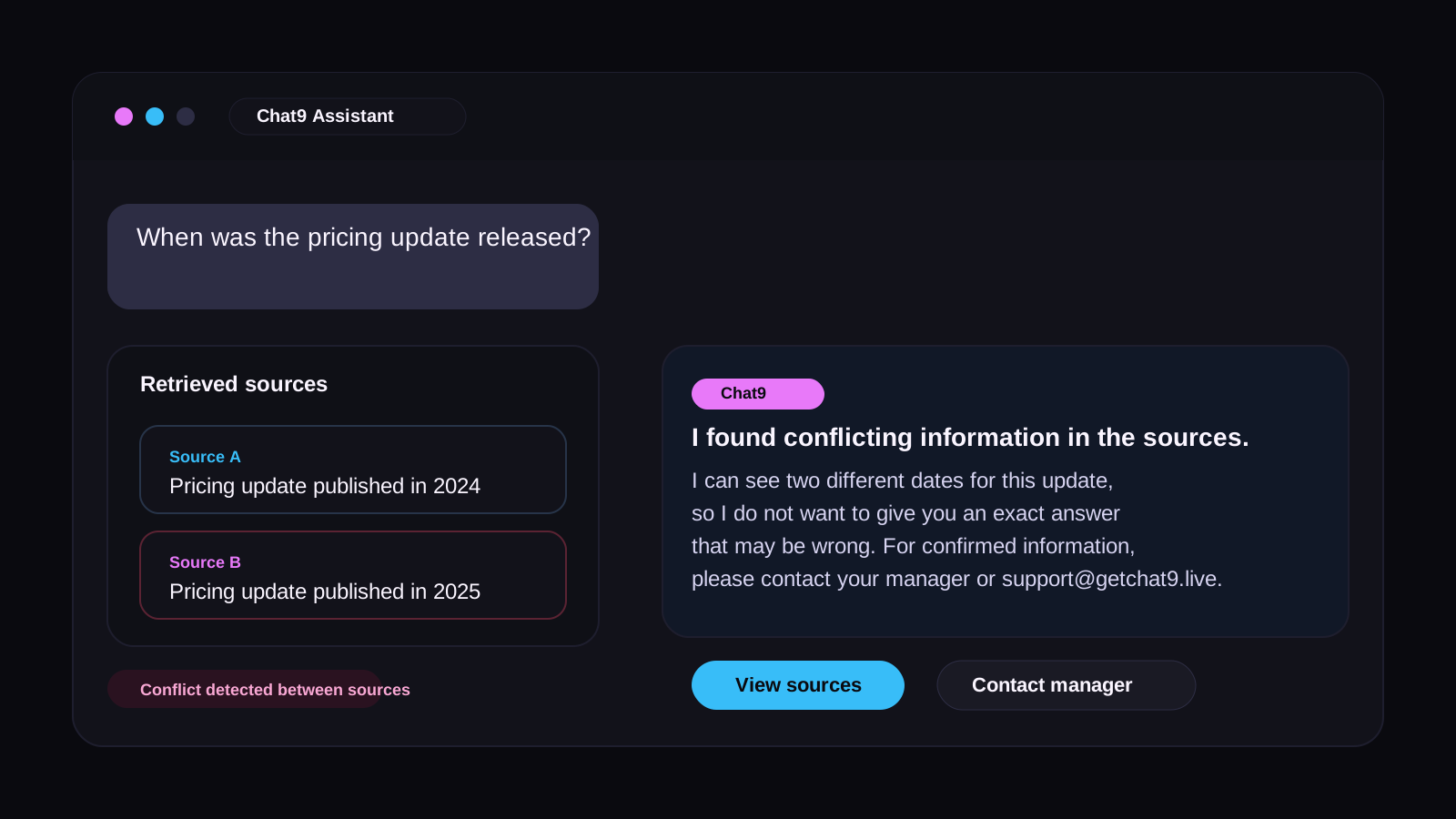
When people hear “AI chatbot,” they often imagine the same basic flow: a user asks a question, the system finds a few relevant documents, and a model turns that material into an answer. That setup can work, but it also creates one of the most common problems in AI products today. The answer may sound polished and confident even when the underlying information is weak, outdated, or inconsistent.
That is the gap we are trying to close with Chat9. We are not building a chatbot that simply retrieves information and responds. We are building a system that pays attention to whether the information it found is actually strong enough to trust.
The difference is in the step between search and answer
In many AI chat experiences, there is almost no explicit quality check between retrieval and generation. If the search step returns documents, the model is expected to make the best of them. But that can hide an important reality: not all retrieved context is equally reliable. Sometimes there is too little evidence. Sometimes the best match is only loosely related to the question. And sometimes the sources disagree with each other.
Chat9 adds an extra layer here. After the system retrieves relevant documents, it evaluates the quality of what was found before shaping the final answer. In simple terms, it asks a different question than most AI chat systems do. Not just “did we retrieve something?” but “is what we retrieved good enough to support a trustworthy response?”
Why this matters in practice
This changes the behavior of the assistant more than it might seem at first. A more typical chatbot may move straight from retrieval to response and fill in the gaps with smooth language. Chat9 is designed to notice when the evidence is thin or when the sources pull in different directions. That makes the system less eager to sound certain when certainty is not warranted.
Imagine a simple example. One knowledge-base document says a key update happened in 2024. Another says it happened in 2025. A basic AI system might choose one version and answer confidently. Chat9 is designed to recognize that the conflict exists in the first place. Instead of pretending the answer is obvious, it can treat the disagreement as a signal that the underlying information needs care.
We are not trying to make the model sound all-knowing. We are trying to make it more honest about the data it is using.
Reliability matters more than polish
For a business, the most frustrating AI failures are rarely the obvious ones. The real problem is when a system delivers an answer with confidence and still gets it wrong. That is especially risky in customer support, internal knowledge tools, onboarding flows, and other B2B contexts where a small mistake can create confusion, extra workload, or lost trust.
By treating source quality as a first-class concern, Chat9 helps reduce that risk. If the available information is limited, weak, or contradictory, the system does not have to behave as if everything is clear. That creates a more transparent experience for both the end user and the team operating the product.
It also improves the knowledge base itself
There is another benefit here that is easy to miss. Once the system starts noticing conflicting or unreliable sources, those issues become visible to the team. Over time, the chatbot is not just answering questions. It is helping surface gaps, overlaps, and contradictions in the content behind the experience. In that sense, reliability signals improve both the chat layer and the knowledge layer.
That matters because a strong AI experience is never only about the model. It is also about the health of the information the model depends on. If your documentation is inconsistent, the assistant should make that easier to detect, not harder.
Where Chat9 is heading next
Today, Chat9 already includes the key building blocks of this approach. It can retrieve relevant material, evaluate how dependable that material appears to be, and detect clear disagreements between sources. Just as importantly, this is not designed as a black box. Teams can inspect the signals behind the system’s behavior and understand why a result was treated as strong, weak, or conflicted.
The next step is to push those reliability signals even deeper into the final response itself. If the evidence is conflicting, the answer should reflect that. If the support is thin, the system should avoid sounding more confident than it should. That is where AI becomes more predictable, more operationally useful, and more aligned with how businesses actually need it to behave.
In the end, we see Chat9 moving beyond a simple “find and answer” model. The better model is: retrieve, evaluate, then answer with the quality of the evidence in mind. That does not just make AI feel smarter. It makes it more dependable, and in real products that is often what matters most.